IKEA Kitchen Countertops: EKBACKEN vs. SÄLJAN vs. KARLBY
A new countertop can completely change the look of your kitchen. But when you're shopping at IKEA, choosing between EKBACKEN, SÄLJAN, and KARLBY isn't just about finding the right color.
Two are made with laminate. One has a real wood surface. And although they may look similar in photos, they differ in price, thickness, maintenance, and how they handle everyday wear.
So, is it worth paying extra for KARLBY? Or can a less expensive laminate countertop do the job just as well?
Let's compare these three popular IKEA kitchen countertops and find out which one makes the most sense for your home.
1. EKBACKEN — A Simple, Affordable Way to Update Your Kitchen
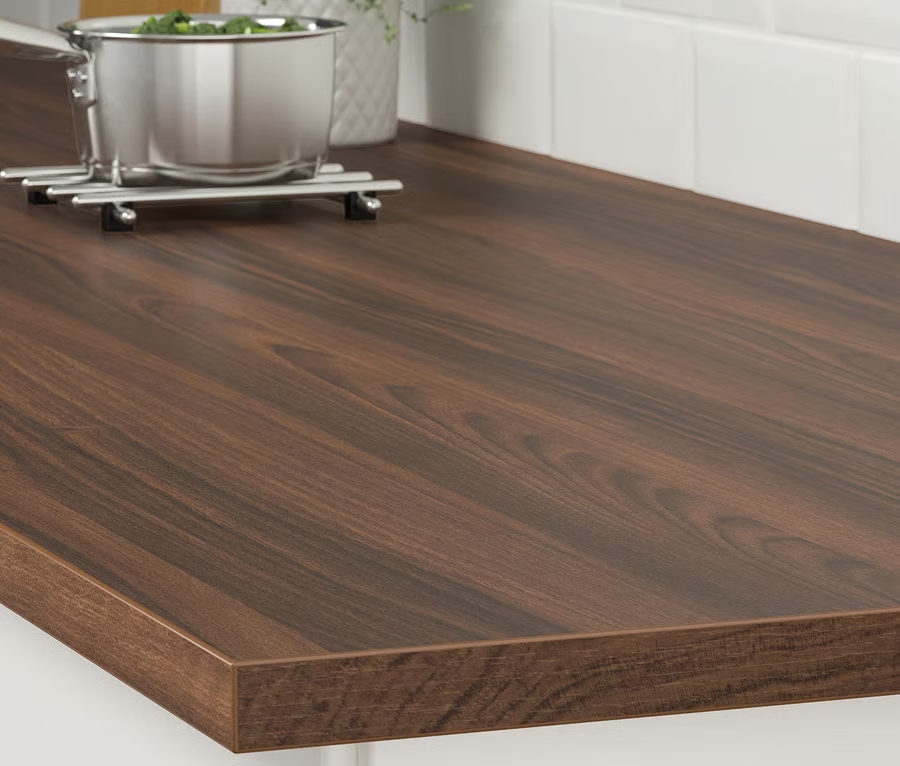
If you like clean lines and modern finishes, EKBACKEN is a good place to start.
It's a laminate countertop available in several styles, including marble, concrete, stone, and wood effects.
The surface is easy to wipe clean, and there's no oiling or refinishing involved. For everyday cooking, that's a practical advantage.
Why Choose EKBACKEN?
One of its most noticeable features is the slim 1⅛-inch profile.
Compared with the thicker SÄLJAN and KARLBY, it creates a lighter, more streamlined look. It can work particularly well with flat-front cabinets and simple modern kitchens.
EKBACKEN is also a good option if you want a marble or concrete appearance without the cost of a stone countertop.
For example, the 74-inch brown walnut-effect version was listed at $119.
What Should You Know?
The wood and stone patterns are printed laminate, not real wood or stone.
And while the surface handles normal kitchen use well, it can still scratch or suffer heat damage.
If a knife leaves a deep mark or the laminate chips, you can't simply sand the surface and refinish it.
Best for: Homeowners who want an affordable, low-maintenance countertop with a clean, modern appearance.
2. SÄLJAN — A Thicker Look Without the Extra Maintenance

At first glance, SÄLJAN might seem like a more expensive version of EKBACKEN.
But there's an important distinction: SÄLJAN is also laminate.
You're not paying for a different surface material. You're mainly getting a thicker countertop profile and a different selection of finishes.
What Makes SÄLJAN Worth Considering?
SÄLJAN is 1½ inches thick, giving it the substantial appearance many homeowners associate with traditional kitchen countertops.
It comes in finishes such as oak effect and stone effect, making it easy to pair with both modern and more traditional cabinets.
The 74-inch oak-effect version was listed at $129 — only $10 more than the EKBACKEN brown walnut-effect example above.
For that small price difference, you may prefer SÄLJAN's thicker edge.
Does Thicker Mean More Durable?
Not necessarily. Both countertops have a laminate surface over particleboard. A thicker profile doesn't automatically make SÄLJAN more resistant to scratches, heat, or moisture.
You'll still need cutting boards, trivets, and properly sealed edges.
The advantage is that you get a thicker appearance without switching to a material that requires regular oiling.
Best for: Busy kitchens where easy cleaning matters, but you prefer the look of a thicker countertop.
3. KARLBY — Is Real Wood Veneer Worth the Extra Money?

KARLBY is the most interesting of the three because it looks and feels like real wood.
And that's because the top layer actually is real wood.
But here's something many shoppers don't realize: KARLBY is not a solid wood butcher block countertop.
It has a particleboard core covered with thick natural wood veneer. The veneer is approximately ⅛ inch thick.
This construction gives KARLBY a natural wood surface without requiring a solid wood slab.
What Are You Paying Extra For?
The main attraction is appearance. Unlike a printed wood pattern, real veneer has natural grain variations, texture, and subtle differences in color. No two pieces look exactly alike.
The 74-inch oak version was listed at $199, while walnut was $279.
KARLBY also offers something laminate doesn't: the wood surface can be lightly sanded and refinished when needed, provided you stay within the limits of the veneer.
The Trade-Off: More Maintenance
KARLBY arrives pre-treated with hard wax oil, but that doesn't make it maintenance-free.
IKEA recommends regular wood oil treatment, with extra attention around sinks, cooktops, and areas that may dry out.
You'll also need to wipe up water promptly and avoid leaving wet items sitting on the surface.
This is especially important if your sink or faucet is installed through the countertop.
If you'd rather not think about oiling, moisture, and occasional refinishing, a laminate countertop may be more practical.
Best for: Homeowners who genuinely love natural wood and are comfortable giving it a little extra attention.
What About Water, Scratches, and Hot Pans?
This is where the differences between the materials become more important than their appearance.
Water and Moisture
EKBACKEN and SÄLJAN have water-resistant laminate surfaces, making everyday spills easy to clean. However, neither is waterproof throughout. Water that penetrates damaged edges, joints, or sink cutouts can reach the particleboard underneath.
KARLBY also needs protection from moisture, and its natural wood surface requires additional care.
For all three countertops, proper sealing around sinks and exposed cut edges is essential.
Scratches and Everyday Wear
Laminate is convenient because it doesn't need regular surface treatments. But deep scratches or chips are difficult to repair invisibly.
KARLBY can develop marks in its wood surface, but minor damage may be repairable through careful sanding and refinishing.
That doesn't mean it's more scratch-resistant. It simply offers different repair options.
Heat Resistance
None of these countertops should be treated as a surface for hot pots and pans.
IKEA recommends using trivets and avoiding heat-producing appliances directly over countertop seams, where heat can damage the joint.
What Do Customer Reviews Tell Us?
Customer ratings provide another useful perspective, although they shouldn't be the only factor in your decision.
At the time of writing, IKEA USA displayed the following approximate ratings:
Countertop | Customer rating |
EKBACKEN | 3.7/5 |
SÄLJAN | 4.4/5 |
KARLBY | 3.7/5 |
Ratings are snapshots from IKEA USA listings and may include reviews across multiple finishes or sizes.
The feedback also highlights an important difference between what shoppers like in a showroom and what they enjoy living with.
In online discussions, some KARLBY owners praise its natural appearance, while others describe maintenance concerns, particularly around sinks. Laminate owners often appreciate the easier cleaning and lower cost, although individual experiences vary.
The practical lesson? Don't choose a countertop based on appearance or star ratings alone. Think about how much maintenance you're willing to do.
Is KARLBY Worth the Extra Cost?
Let's compare two countertops with a similar oak appearance.
A 74-inch SÄLJAN oak-effect laminate countertop costs approximately $129. The same-length KARLBY oak veneer version costs about $199. That's a $70 difference per countertop.
With KARLBY, you're paying for genuine wood grain, natural variation, and a surface that can receive limited refinishing.
You're not necessarily buying better water resistance or a countertop that needs less care.
If the look and feel of natural wood are important to you, that extra cost may be worthwhile.
But if your kitchen gets heavy daily use, you have young children, or you simply want a surface that's easy to maintain, SÄLJAN can be the more sensible purchase.
Before You Buy: Don't Overlook Installation
Even a good countertop can develop problems if it's installed incorrectly.
Before ordering, keep these details in mind:
Check the dimensions. Standard pre-cut IKEA countertops commonly come in 74-inch and 98-inch lengths, and not every finish is available in an island size.
Plan your sink and cooktop cutouts. These openings must be measured accurately, with exposed material properly protected against moisture.
Protect against steam. IKEA calls for a FENSJÖ diffusion barrier beneath applicable laminate and veneer countertops installed over dishwashers or ovens.
Check the support requirements. Islands and breakfast bars with extended overhangs may need additional supports. Follow the instructions for your specific countertop.
One more detail: IKEA's pre-cut countertops are not made to the exact dimensions of your kitchen. Cutting, edge finishing, and fitting may still be necessary.
So, Which IKEA Kitchen Countertops Should You Choose?
Choose EKBACKEN if you want a slim, modern countertop with plenty of decorative finishes and minimal maintenance.
Choose SÄLJAN if you prefer a thicker countertop, want to keep costs reasonable, and don't want the upkeep of real wood.
Choose KARLBY if natural wood grain is a priority and you're comfortable with regular care.
The most expensive option isn't automatically the best one. The right choice is the countertop that suits your kitchen, your budget, and the way you actually use the space.
Updating Your IKEA Kitchen? We Can Help.
Tools & Hands provides kitchen cabinet assembly and installation across Chicago's Northwest Suburbs, including leveling, alignment, doors, drawers, and finishing touches.
Free on-site estimates. Clear pricing before work begins.